On this page 6 sections
If Invisalign is such an amazing form of treatment, why does anyone still choose braces? Even with advancements in technology, Invisalign may not be suitable for most people. There are, in fact, pros and cons to Invisalign braces. And we list all of them below.
It’s not a small purchase or a short commitment, that’s why it’s important to understand the invisalign braces pros and cons. Treatment can last from a few months to nearly two years, so it’s important to understand exactly what you are entering into before you even make your first appointment.
Below, we’ll walk through the real benefits, the honest drawbacks, what it costs here in Houston, and how it stacks up against traditional metal braces, so you can make a decision with your eyes open rather than relying on guesswork.
Invisalign Benefits and Drawbacks at a Glance
Considering all the advantages and disadvantages of Invisalign prior to your initial appointment? Here’s the short version:
| Benefits | Drawbacks |
| Nearly invisible, discreet appearance | Cost can run similar to or higher than braces |
| No food restrictions, remove them to eat | Requires about 21 to 22 hours of daily wear |
| Easier brushing and flossing | Not always suitable for severe bite issues |
| Fewer emergency dental visits | Results depend on consistent compliance |
The Benefits of Invisalign Treatment
They are Almost Invisible!
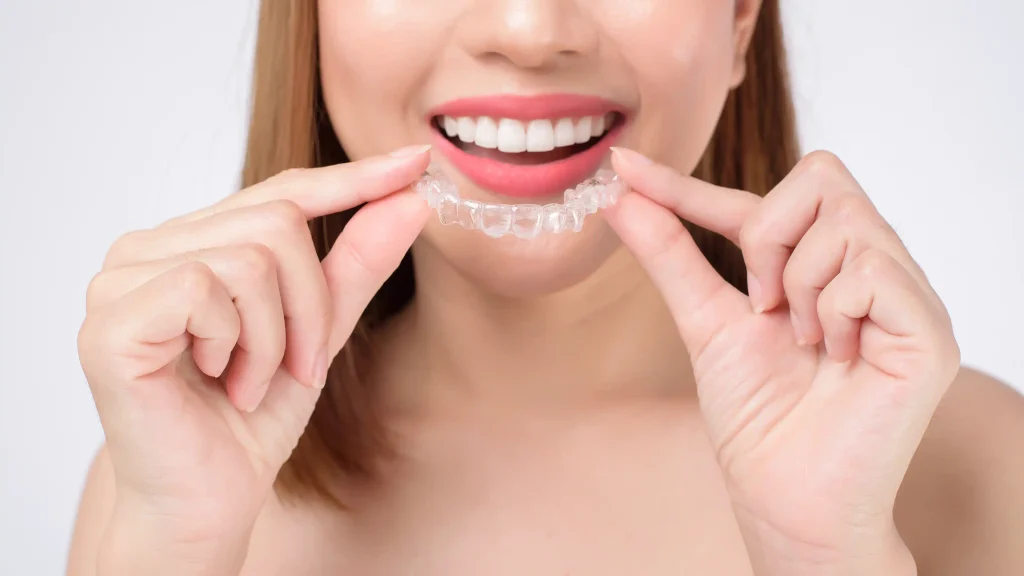
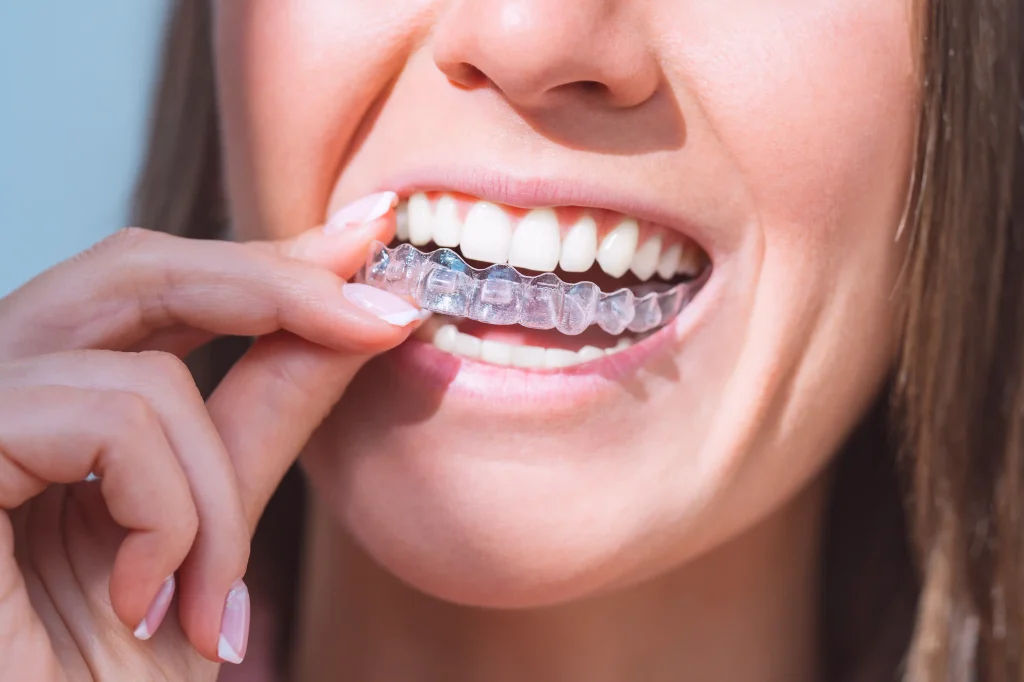
When reviewing the pros and cons of Invisalign braces, the benefit most people don’t recognize is right there in the name.
Invisalign is almost invisible!
Invisalign is an amazing option for those who don’t like the “metallic” look of braces. With aligners, you can straighten your teeth without letting anyone know!
More Comfortable Than Metal Braces
Unlike sharp brackets and wire ends, smooth plastic aligners won’t rub against your cheeks and lips. Patients can easily notice the difference in comfort between Invisalign and traditional braces during the first weeks when patients are used to the metal braces. It’s not particularly painful, but it usually subsides in a day or two after changing to a new tray.
Fewer Dentist Visits
Typical braces require adjustments every 3-4 weeks. Invisalign requires patients to visit every 6-8 weeks to get the next pair of trays and make sure the treatment is progressing. That’s fewer appointments to work around your job, school or family schedule.
No Food or Dietary Restrictions
Those with braces have to avoid:
- Popcorn
- Bread with hard crusts
- Biting into corn on the cob
- Most kinds of candy or gum
Meanwhile, with Invisalign braces, none of your favorite foods are restricted. You simply remove them and can eat whatever you like!
It is Easy to Brush and Floss
You may have heard the consequences of improper dental hygiene. Some of them are:
- Swollen gums
- Cavities
- Permanent white scars on your teeth
These all are a result of poor brushing and flossing with braces.
Brushing and flossing with braces is not impossible, but certainly more difficult than normal brushing.
Potential Drawbacks of Invisalign
As ‘best-practices’ suggest, one should wear Invisalign aligners for about 21 hours per day. This means wearing them all the time except when eating and brushing.
So you may be thinking, what happens if you don’t wear your aligners as instructed?
Here are a few things that can happen, such as:
- Your teeth won’t “keep up” with the Invisalign aligners, which means your treatment may take longer.
- If you don’t wear aligners as instructed by your dentist, there are chances you will get sore teeth and experience discomfort, just like braces.
- Some dental problems CAN’T BE FIXED if the aligners aren’t worn as prescribed.
Invisalign Disadvantages: What Are the Cons of Invisalign Beyond Compliance?
Wear time isn’t the only trade-off. There are a few more disadvantages of invisaligns that you should be aware of before you start using them:
- Not ideal for severe cases: Sometimes teeth require vertical movement, large rotations or major bite correction and traditional braces are still the best option.
- Easy to lose or forget: Aligners can be lost, as they can easily fall out, and it is possible to leave them in a napkin at a restaurant.
- Mild speech changes at first: Patients may experience a mild lisp in the first few days when they first use the new tray, but this typically clears up in a short period of time.
- Attachments may be needed: In some cases, additional tooth-colored bumps may be glued to specific teeth for better grip and may be more noticeable than the aligner itself.
Invisalign Benefits and Disadvantages: The Cost Factor
One of the major invisalign benefits and disadvantages is cost. In Houston, Invisalign typically ranges in price from $2,000 to $8,500, depending upon the amount of movement required for your teeth:
| Case Complexity | Typical Houston Price Range |
| Mild crowding or spacing | $2,000 to $3,500 |
| Moderate crowding or bite issues | $3,500 to $5,500 |
| Complex alignment or bite correction | $5,500 to $8,500 |
This is almost the national average of approximately $5,100, and is close to the cost of traditional braces for similar cases. Many dental insurance plans cover part of the cost if your policy includes orthodontic benefits, and HSA or FSA funds can often be used too.
Even if the total price seems like too much, many Houston dental practices like ours offer monthly payment options that allow you to build up the payment over time. Make sure you ask your dentist what is included in the quote, as your aligners, any refinement trays, and retainers after should be covered in the entire quote. If refinements and retainers are not included in the quote, it may be a lower price but will likely be the same or more when the extras are added.
Invisalign vs. Traditional Braces: Quick Comparison
Still deciding between the two? Here’s how they stack up side by side:
| Feature | Invisalign | Traditional Braces |
| Visibility | Nearly invisible | Visible metal brackets |
| Removable | Yes, for eating and cleaning | No, fixed in place |
| Diet restrictions | None | Avoid sticky, hard, or crunchy foods |
| Comfort | Smooth plastic, less irritation | Metal can rub cheeks and gums |
| Compliance required | High, 21+ hours a day | None, since they can’t be removed |
| Best suited for | Mild to moderate cases | Mild to severe or complex cases |
| Houston cost range | $2,000 to $8,500 | Generally comparable, varies by case |
Is Invisalign The Best Choice For You?
This question is best answered after considering the pros and cons of Invisalign listed above and discussing your treatment with your dentist.
In general, Invisalign is a better option for mild to moderate crowding or spacing, if you are concerned about how your treatment will look each day, and are able to commit to wearing your trays close to the entire day, every day. If your case is more complicated, if you know you won’t be able to make it through the compliance of braces, or if you don’t want to consider compliance at all, traditional braces might be more predictable. The only way to be sure to be on the right path for your smile is to see your dentist, who will examine your bite and take a few digital scans.
Ready to Talk to a Dentist About Invisalign?
If you are considering Invisalign for your smile, an initial consultation is the simplest approach to receiving a straightforward response. At Smile4Ever Family Dentistry in Houston, TX we can discuss the options with you, provide you with an individualized cost estimate, and help you determine which choice is best for your situation: Invisalign or traditional braces. Call (281) 213-5668 to schedule an appointment.