


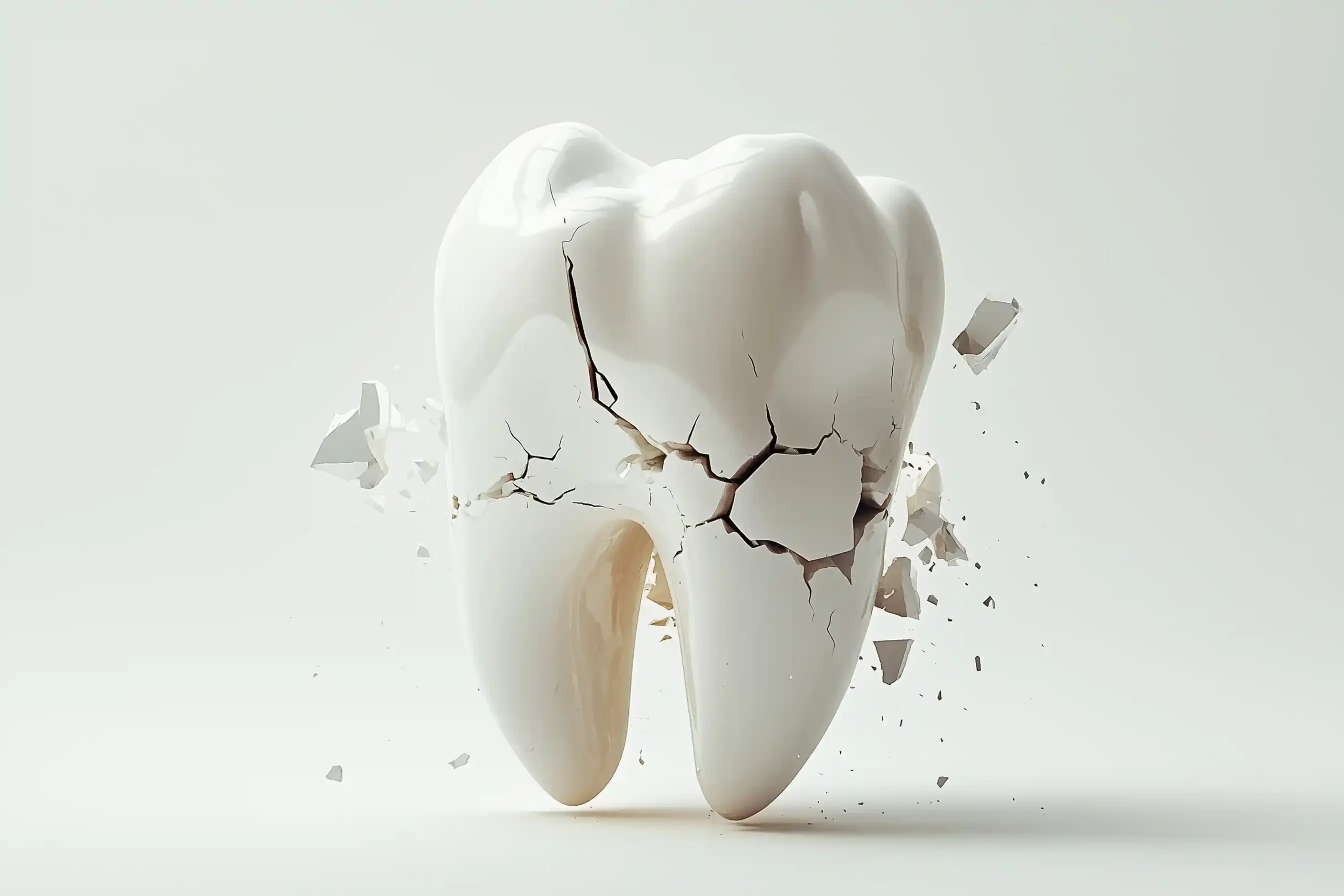
Tooth enamel is the hardest substance in the human body. So when patients come to us asking ‘why my teeth are breaking into pieces,’ there is always a reason. Healthy enamel does not simply crumble or crack without cause. Something has weakened it, and figuring out what is the first step toward fixing it.
Whether your teeth are falling apart slowly over time or you have noticed teeth cracking all of a sudden, this guide covers the nine most common causes and what you can do about each one. If you are in Houston, TX, Smile4Ever Family Dentistry is here to help. Call (281) 213-5668 for a same-day appointment.
Why Are My Teeth Breaking into Pieces?
There are many reasons why teeth break into pieces. Brittle teeth could indicate genetic conditions, poor habits, and more. If you find yourself asking ‘why do my teeth keep breaking’ or ‘why are my teeth cracking,’ the answer is rarely just one thing. Most cases involve a combination of factors that have built up over time. Here are the nine most common ones.
1. Genetic Factors: Did you know dental issues could be genetic? Every individual has a different strength in their teeth, which means how strong enamel and dentin are will vary among everyone. Other than this, your teeth might break into pieces due to genetic factors such as Dentinogenesis imperfecta, Amelogenesis imperfecta, etc. Conditions like Amelogenesis imperfecta (a defect in enamel formation) and Dentinogenesis imperfecta (a defect in the underlying dentin layer) can cause teeth to be structurally weak from birth. Patients with these conditions often notice teeth crumbling or chipping with minimal force, even as young adults. If multiple family members have had similar issues, genetics may be a contributing factor worth discussing with your dentist.
2. Acidic & Sugary Food and Drinks: When you consume something sugary or acidic, it harms your teeth, especially if you have them frequently and do not clean your teeth afterward. You can opt for fluoride treatments or consult your dentist for other options to protect your smile. Acid attacks the enamel surface directly. Frequent consumption of sodas, citrus juices, sports drinks, and even certain vinegars causes enamel erosion over time. Once enamel is gone, it does not grow back. The exposed dentin beneath it is softer and far more susceptible to breakage, leaving patients wondering why their teeth keep cracking despite brushing regularly.
3. Improper Oral Hygiene: If you want healthy teeth and mouth, proper oral care is the number one requirement. So not brushing your teeth or flossing every day might seem like the easy way out, but it is not. Over time, the bacteria damages your teeth and leads to oral health issues; you may notice your teeth breaking into small pieces. To avoid this, regularly attend your dental cleanings and follow your dentist’s advice on proper oral hygiene. Untreated tooth decay in Houston and across all age groups is one of the most preventable causes of teeth crumbling. Cavities hollow out the interior of the tooth structure. Once enough of the tooth has decayed internally, the outer shell becomes thin and brittle. A bite on something hard is all it takes to fracture it.
4. Bruxism: When you grind or clench your teeth, it puts pressure on your tooth enamel. Gradually, your teeth When you grind or clench your teeth, the repeated pressure wears down the enamel surface. Patients with bruxism often ask ‘why are my teeth cracking all of a sudden’ without realizing they have been grinding at night for months or years. The cracking feels sudden because the underlying damage is invisible until the enamel becomes too thin to hold.A custom night guard from your dentist can protect your teeth from further bruxism damage. This is one of the most straightforward interventions available and can prevent significant restorative work down the line.
5. Bite Problems and TMJ Disorder: Proper occlusion and chewing forces are important for our mouths, but issues like TMJ disorder may result in bite issues. These issues put stress on your teeth, causing them to break into pieces. Crooked teeth are also responsible for bite problems, but you can visit an orthodontist for treatment. When your bite is misaligned, certain teeth absorb far more force than they were designed to handle. Over time, those teeth develop micro-fractures that eventually cause a full crack or break. Patients with TMJ disorder often notice teeth cracking on the same side as their jaw pain, which is a direct consequence of the uneven load.
6. Dehydration and Dry Mouth: If you are not hydrated, it affects your overall health, even your teeth. Your mouth might turn dry, which allows the harmful bacteria to stay on your teeth. Reduced salivary flow also increases the dangerous effects of the sugary and acidic food that you consume. Chronic dry mouth (xerostomia), whether caused by certain medications, autoimmune conditions, or habitual mouth breathing, significantly accelerates enamel erosion and decay. Saliva is the mouth’s natural defense system. Without it, acid and bacteria are not neutralized between meals. Patients on long-term medications who notice teeth falling apart should mention dry mouth to their dentist.
7. Hard Food and Habits: Eating food items that are hard may also lead to brittle teeth, including unpopped popcorn kernels, cracking nuts, and more. Ice chewing is one of the most common and overlooked causes of cracked teeth. The temperature shift combined with the hardness of the ice stresses the enamel repeatedly. Using your teeth as tools to open packaging or bite nails also causes micro-fractures over time. Patients who already have brittle teeth from another underlying cause are especially vulnerable to the cumulative damage these habits cause.
8.Enamel Erosion from Acid Reflux: Patients with GERD (gastroesophageal reflux disease) or frequent acid reflux experience a direct attack on their tooth enamel from stomach acid. Unlike dietary acid, which affects the front-facing surfaces, acid reflux teeth damage tends to show up on the back surfaces of the upper teeth and on the chewing surfaces of the back teeth. If you have been told you have acid reflux and you are also noticing teeth crumbling or unusual sensitivity, the two are almost certainly connected. Managing the reflux medically and protecting the remaining enamel with fluoride treatments or dental restorations is the combined approach your dentist and GP can coordinate.
9. Systemic and Medical Conditions: Several systemic conditions can cause teeth falling apart or becoming unusually brittle. These include: Osteoporosis and low bone density, which can affect the jawbone supporting the teeth, Eating disorders such as bulimia, where frequent vomiting causes severe enamel erosion, Celiac disease, which impairs nutrient absorption including calcium and vitamin D, Sjogren’s syndrome, which causes chronic dry mouth and dramatically accelerates decay, Diabetes, which reduces the body’s ability to fight oral infections and slows healing. If your teeth are crumbling despite good oral hygiene and no obvious dietary cause, mention any systemic conditions or medications you are taking at your next dental visit. The pattern of damage is often enough for a dentist to identify the likely cause.

Why Are My Teeth Breaking Off at the Gum Line?
Teeth breaking off at the gum line is a specific pattern that points to a particular cause. When a tooth fractures at or below the gumline, it is almost always due to one of the following:
- Severe untreated decay that has progressed from the crown of the tooth all the way to the root
- A large, failing filling that has left too little natural tooth structure to support the remaining crown
- Root resorption, where the root itself breaks down from within
- Trauma or injury to the tooth that weakened the root over time
Teeth breaking off at the gum line are often not salvageable with a simple filling or crown. Depending on how much root remains and the health of the surrounding bone, treatment may involve a root canal, crown lengthening surgery, or extraction followed by an implant. The earlier you get it looked at, the more options you have.
If you are in Houston and have a tooth breaking at the gum line, call Smile4Ever Family Dentistry at (281) 213-5668. Do not wait for it to get worse.
What to Do When Your Teeth Are Breaking or Crumbling
If your teeth are crumbling or breaking frequently, the first step is a dental exam with X-rays. Your dentist needs to see how much of the tooth structure remains and whether there is any underlying decay, infection, or bone loss before recommending treatment.
Common treatment options include:
Dental Bonding
For minor chips and small cracks, dental bonding uses a tooth-colored resin to rebuild the broken area. It is quick, affordable, and requires no anesthesia in most cases. It is best suited for cosmetic fractures where the tooth structure underneath is still sound.
Dental Crown
When a significant portion of the tooth has broken away, a dental crown in Houston is the standard restoration. The crown caps the remaining tooth structure, restores full chewing function, and prevents the remaining tooth from fracturing further. At Smile4Ever Family Dentistry, we place porcelain and zirconia crowns that match your natural tooth color.
Root Canal
If the fracture has reached the pulp of the tooth or the tooth is also infected, a root canal is needed before a crown can be placed. Root canal treatment removes the infected tissue, relieves the pain, and preserves the tooth so it can be restored.
Extraction and Dental Implant
When a tooth has broken off at the gum line or the remaining structure cannot support a restoration, extraction is the next step. A dental implant is the best long-term replacement for a missing tooth. It restores full function, prevents bone loss, and looks completely natural.

Night Guard for Bruxism
If bruxism teeth grinding is identified as a contributing cause, a custom night guard protects the remaining enamel from further damage. This is a preventive measure that should be implemented alongside any restorative treatment.
Smile4Ever Family Dentistry offers all of the above treatments at our Houston, TX location. If you have a cracked tooth in Houston or notice your teeth breaking more frequently, call (281) 213-5668 or walk in. Same-day emergency appointments are available.
What’s Next?
Teeth do not break for no reason. Whether you are noticing teeth crumbling gradually or asking ‘why are my teeth cracking all of a sudden,’ there is a cause behind it and a treatment for it.
The sooner you get it evaluated, the more tooth structure can be saved. At Smile4Ever Family Dentistry in Houston, TX, we see patients with everything from a single chip to teeth falling apart across multiple areas. We take X-rays, identify the cause, and give you a clear treatment plan.
Call us at (281) 213-5668 or visit us at 14715 TC Jester Blvd, Houston, TX 77068. We are accepting new patients and offer same-day emergency appointments.
Frequently Asked Questions
1. Why do my teeth keep breaking even though I brush every day?
Brushing is important but it does not prevent all causes of teeth breaking. Enamel can weaken from acidic foods and drinks, night grinding, dry mouth, acid reflux, or underlying medical conditions regardless of how well you brush. If your teeth keep breaking, a dental exam will help identify the specific cause so the right treatment can be recommended.
2. Why are my teeth breaking off at the gum line?
Teeth that break at the gum line usually have severe underlying decay, a failing large filling, or structural damage from an old injury. The visible crown of the tooth looks intact until the internal damage becomes too extensive. This pattern is serious and needs prompt dental evaluation. The sooner it is treated, the more likely the tooth can be saved.
3. Why are my teeth cracking?
The most common reasons teeth crack include: night grinding (bruxism), biting hard foods, large old fillings that weaken the surrounding tooth, enamel erosion from acidic foods or acid reflux, and dehydration or dry mouth. Cracks often begin as micro-fractures that are invisible to the naked eye and only become apparent when a piece breaks off.
4. What does it mean when teeth are crumbling?
Teeth crumbling rather than breaking cleanly in one piece often indicates widespread enamel weakness rather than a single structural failure. Common causes include advanced decay, enamel erosion from chronic acid exposure, genetic enamel defects, or long-term dry mouth. In some cases it can also signal an undiagnosed systemic condition. Crumbling teeth need to be seen by a dentist promptly as the situation typically worsens quickly without treatment.
5. Are brittle teeth always genetic?
No. While genetics can cause brittle teeth through conditions like Amelogenesis imperfecta, most cases of brittle teeth in adults are acquired rather than inherited. Acid erosion, decay, dry mouth, grinding, and nutritional deficiencies are far more common causes. Genetic enamel defects are typically identified in childhood or early adulthood and affect all teeth relatively evenly.
6. Can teeth grinding cause teeth to break?
Yes. Bruxism teeth grinding is one of the leading causes of cracked and broken teeth in adults. The pressure generated during grinding can exceed the force of normal chewing by up to ten times. Over months or years, this wears the enamel down to a point where normal chewing forces cause fractures. Many people grind at night and are unaware of it until a dentist identifies the wear pattern. A custom night guard is the standard intervention.
7. Can a dentist fix teeth that are falling apart?
In most cases, yes. The treatment depends on how much tooth structure remains. Options include dental bonding for minor chips, dental crowns in Houston for larger fractures, root canal therapy if the pulp is involved, or extraction and implant if the tooth cannot be saved. The key is getting evaluated early. Teeth falling apart that are ignored tend to progress quickly into situations requiring more complex and expensive treatment.
8. When should I go to the emergency dentist for a broken tooth?
Go immediately or call your dentist same day if: you are in significant pain, the break has exposed the nerve (sharp ongoing pain triggered by temperature), there is visible bleeding at the gum line, you have swelling in the jaw or cheek, or the tooth has broken off entirely. Smile4Ever Family Dentistry in Houston sees dental emergencies same day. Call (281) 213-5668.