On this page 12 sections
- What Is a Cavity?
- How Dentists Diagnose Cavities
- How Do Dental Fillings Work?
- The Cavity Filling Procedure: Step by Step
- Dental Filling Materials
- How Much Does a Dental Filling Cost in Houston?
- How Are Cavities Between Teeth Filled?
- Choosing the Right Cavity Treatment
- Signs You May Need a Cavity Filling
- How to Care for Your Tooth After a Filling
- Schedule a Dental Appointment
- Frequently Asked Questions
If you have a cavity, then your dentist has probably recommended a dental filling. Fillings are common and simple procedures. However, they can be nerve-wracking if you don’t know what to expect. Below, we will explain how fillings work. This will help you face your dental appointment with confidence!
If you’re just looking into cavity treatment for the first time or you want to know what happens during a tooth cavity filling, you can find out in this guide, how dentists diagnose and fix a cavity, what different filling materials cost here in Houston, and what to expect if your cavity is between two teeth or has gone beyond what a simple filling can do.
What Is a Cavity?
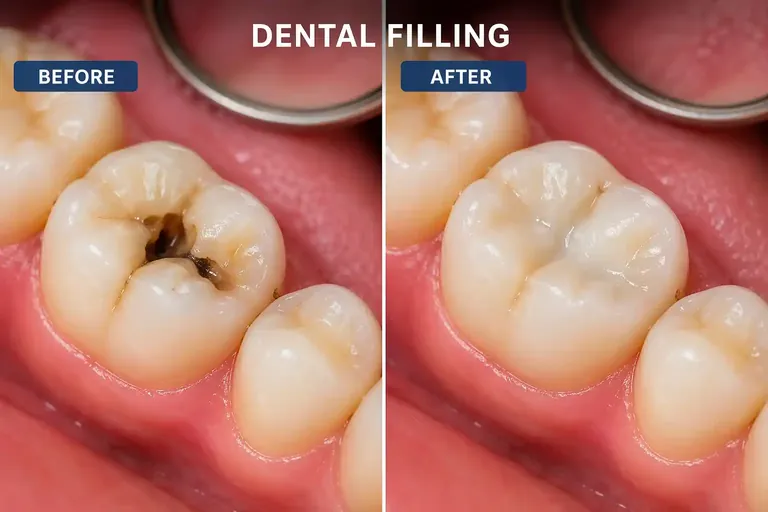
Cavities are actually small holes that form in a person’s teeth. Over time, bacteria builds upon the surface of the teeth. This bacteria can penetrate the tooth enamel, especially with poor oral hygiene. The result is a cavity or a small hole caused by bacteria.
Cavities don’t just develop out of nowhere. They start small, often as a faint white or brown spot where enamel has begun to weaken, and grow larger the longer they go untreated. These are often foods that contain a lot of sugar or starch, which bacteria in plaque eat and make acids that destroy enamel. That’s why early detection of a cavity is important. A small cavity will typically require only a filling, but an untreated cavity can become so large that it may require a root canal or extraction.
If plaque and bacteria are allowed to build up on the teeth and the problem is not addressed, cavities can get worse. Tooth decay can be caused by frequent consumption of sugary or starchy foods, not brushing and flossing often enough, or not visiting the dentist regularly. Improving oral hygiene alone will not rebuild the tooth once a true hole has formed.
How Dentists Diagnose Cavities
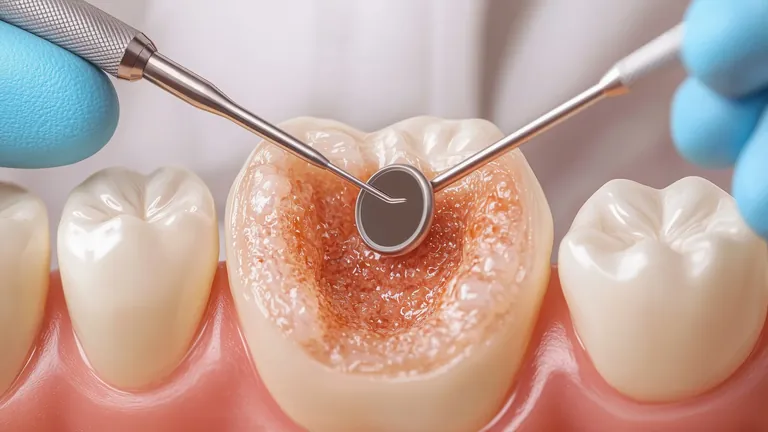
Your dentist will first examine the tooth that has a cavity, and will determine the extent of decay before beginning the cavity filling. They might also use dental X-rays to identify cavities between the teeth and under the surface of the tooth. Depending on the location and severity of the decay, your dentist will decide if a filling is the right cavity treatment or if you will require a different treatment like a crown or root canal.
How Do Dental Fillings Work?
After you know what a cavity is, the term “filling” suddenly makes more sense. In order to fix your tooth, your dentist must fill the hole that is on its surface. White fillings are the most common cavity treatment, they are only effective for mild to moderate decay. If your cavity has moved beyond the enamel and into the tooth root, then you will probably need a root canal. However, people with extensive decay might need an extraction instead.
The Cavity Filling Procedure: Step by Step
What do dentists do for cavities, exactly? The procedure is simpler than most patients think:
- Examination and diagnosis: The dentist checks the tooth and might take X-rays to find out the extent and position of the decay.
- Numbing the area: The area of treatment is numbed with local anesthetic to ensure the patient feels comfortable during the treatment.
- Removing the decay: The dentist gently removes the decayed area of the tooth with dental tools.
- Cleaning and preparing the tooth: The tooth is cleaned and shaped to allow the filling to restore the tooth.
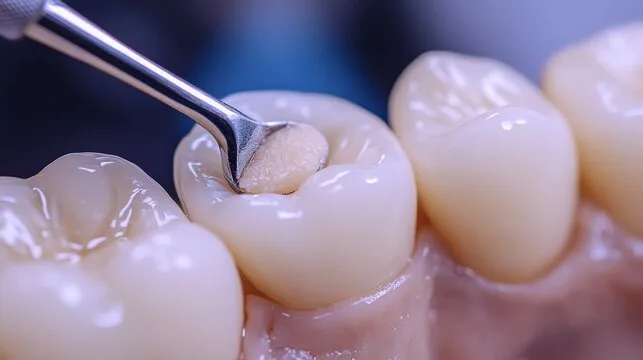
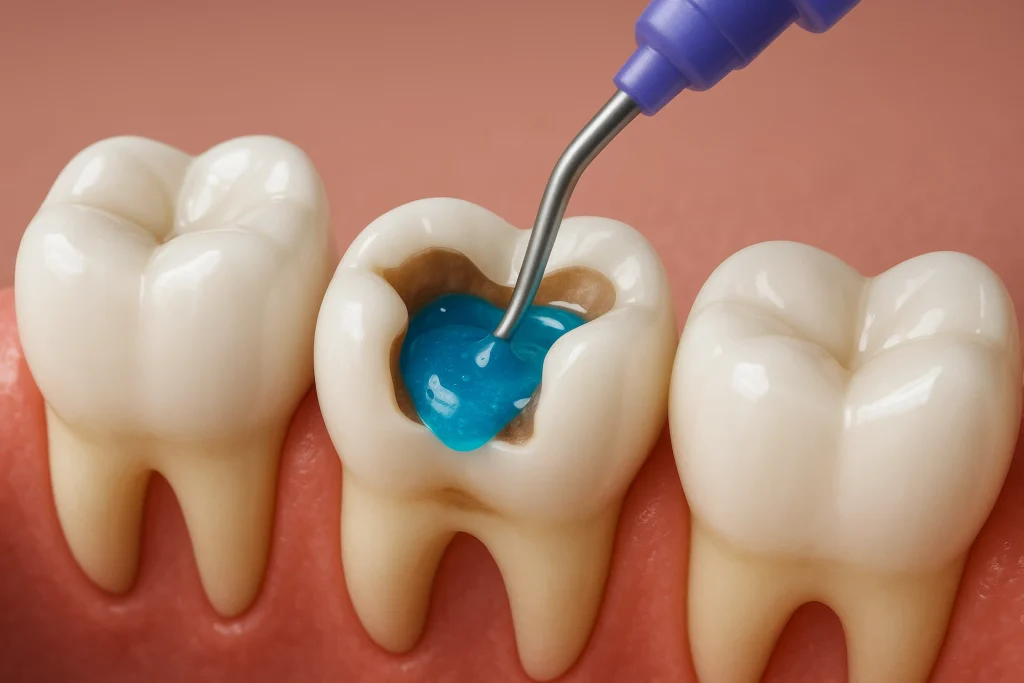
- Placing the filling: The selected material is placed inside the prepared area and shaped to follow the natural contours of the tooth.
- Hardening the material: Composite fillings are hardened with a special curing light, usually in layers.
- Checking the bite: Dentist checks how teeth meet each other and adjusts if necessary before polishing the filling.
Most single-tooth fillings take about 20 to 40 minutes from start to finish, and you can eat normally again once the numbness wears off, usually within a couple of hours.
Dental Filling Materials
Not all cavity dental filling materials are the same. The type of material for a tooth cavity filling will vary depending on the location of the cavity, the size of the cavity, how it will look, chewing forces, and the dentist’s recommendation.
For the most part, modern fillings are not noticeable. This is because most cavities today are filled with a tooth-colored material. However, amalgam fillings made of silver used to be common. If you still have amalgam fillings, then you can get them replaced with a more subtle option.
How Much Does a Dental Filling Cost in Houston?
In Houston, a filling typically costs between $100 and $600 per tooth, depending on the material and size of the cavity.
For a typical composite filling, the majority of Houston patients without insurance will pay between $200 and $300 per tooth. Fillings are a basic dental care procedure and usually covered by dental insurance at 70% to 80% after your deductible, which can save you a lot of money.
How Are Cavities Between Teeth Filled?
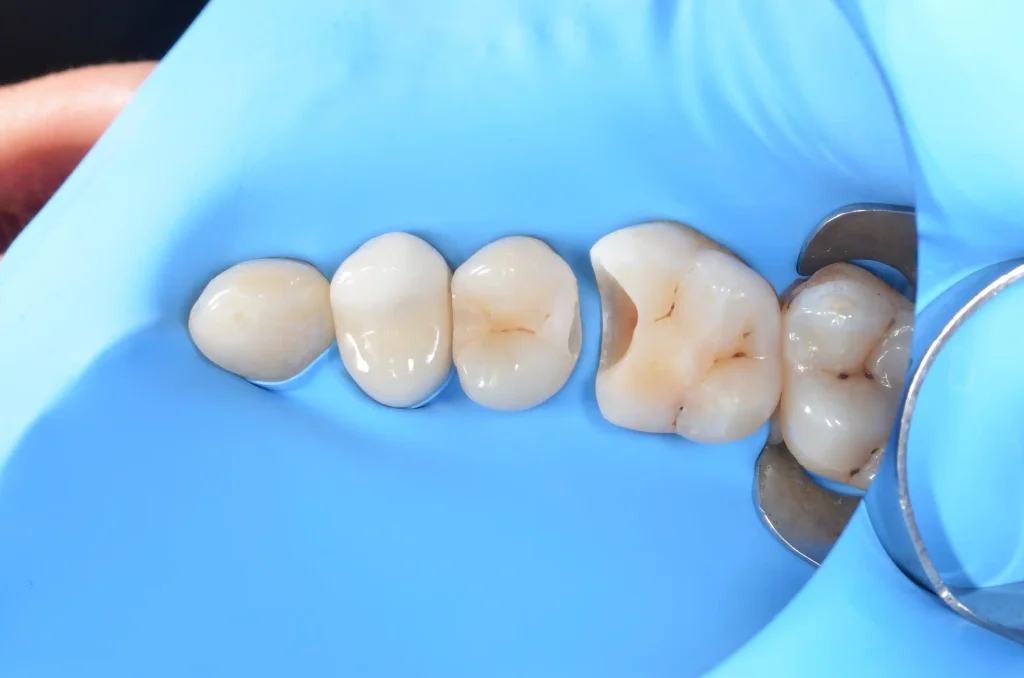
If a cavity develops between two teeth, it’s referred to as an interproximal cavity, and is treated somewhat differently than a cavity on the visible chewing surface. Before filling, your dentist will insert a thin strip of metal or plastic between the teeth, called a matrix band. It helps to hold the soft filling material in place during shaping and curing, and helps prevent the new filling from adhering to the adjacent tooth. After the band is removed, your dentist will check to see if your floss still slides between the teeth easily, as a poorly-shaped filling can leave a rough edge that will trap food in place.
Choosing the Right Cavity Treatment
Dental treatment for cavities isn’t one-size-fits-all. The sooner a cavity is fixed, the more of your natural tooth structure your dentist will be able to preserve. Your dentist will examine the tooth and may take X-rays to determine how deep the decay has gone before recommending a cavity treatment.
Catching a cavity early almost always means a simpler, less expensive cavity treatments option, which is one of the best reasons not to skip regular checkups.
Signs You May Need a Cavity Filling
There are a couple of common indicators that you might have a cavity that should be checked:
- Heat, cold or sweet sensitivity
- A dark area or hole that can be seen on a tooth
- Mild to severe pain on chewing
- A bump that you can feel with your tongue.
Some cavities do not produce noticeable symptoms initially so it is best not to delay a dentist appointment just because a cavity isn’t causing a lot of pain. Other signs can include food sticking in one tooth repeatedly, sensitivity or a small hole that you can see or feel. Dental exam can detect decay in early stages and indicate if a cavity filling or other treatment is necessary.
How to Care for Your Tooth After a Filling
Once a new filling is in place, it will not need a lot of special care, but there are a number of simple habits you can develop that will help to maintain the filling and keep it in good condition. After treatment, you may notice some slight sensitivity in your tooth, particularly when the numbness subsides.
- Wait until the numbness wears off before chewing to avoid biting your cheek or tongue.
- Avoid very hard foods, such as ice and hard candy, especially during the first day.
- Continue brushing twice a day and flossing around the treated tooth.
- Limit frequent sugary foods and drinks to help prevent new cavities.
- Contact your dentist if sensitivity persists, your bite feels uneven, or you notice a sharp edge around the filling.
With proper oral hygiene and regular dental checkups, your filling can remain functional for years. If you experience ongoing pain, increasing sensitivity, or discomfort when biting, your dentist can check the filling and make adjustments if needed.
Schedule a Dental Appointment
Smile4Ever Family Dentistry can help you fight against cavities. Whether you need a professional cleaning, a dental exam, or fillings, our team can care for your teeth. We will also offer you personalized advice to stop cavities from forming in the future. To learn more, call us at 281-213-5668. You can also book your appointment online.