


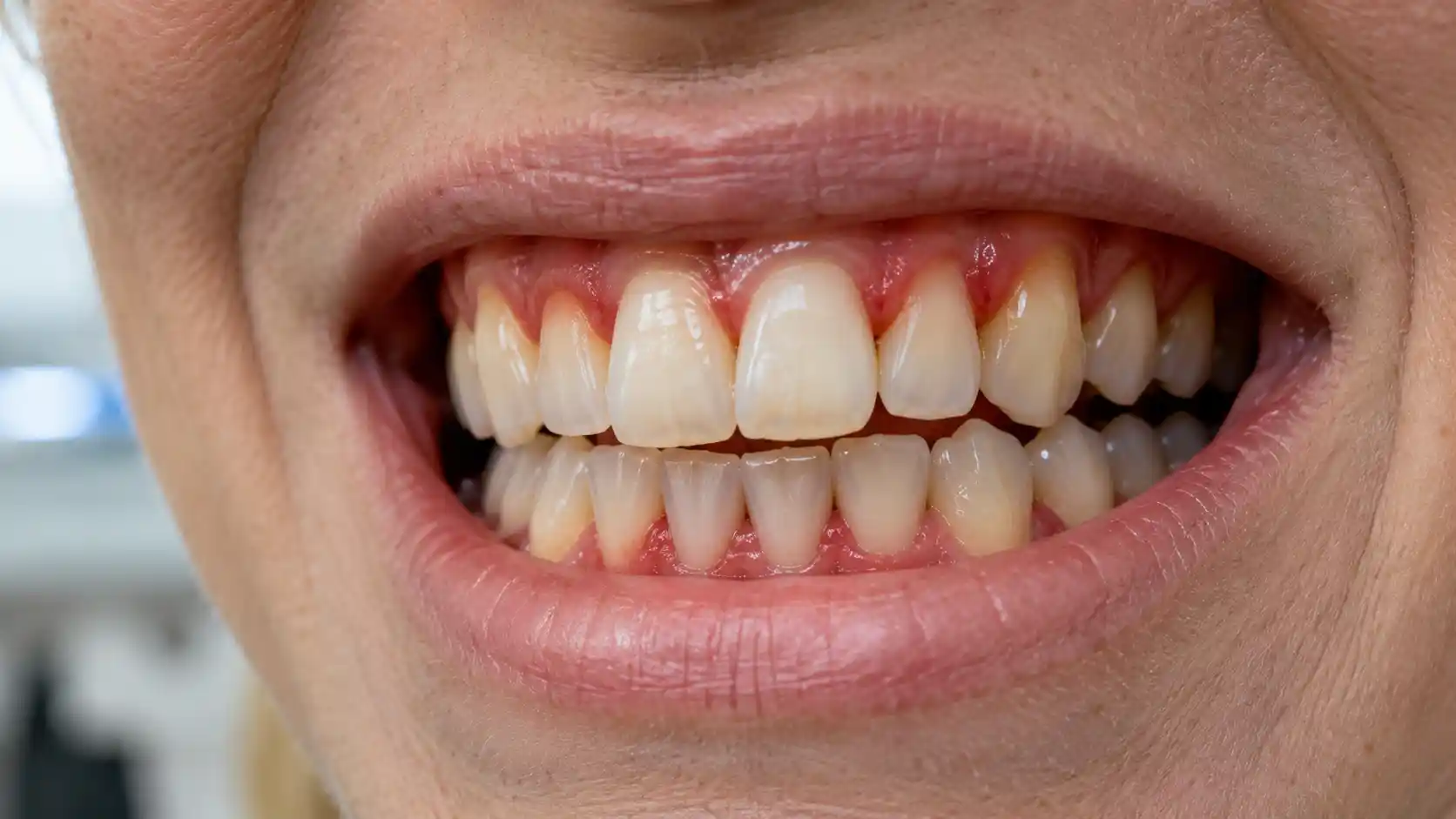
Gum disease can develop without causing pain, so visible changes are often the first warning signs. Red, swollen, or bleeding gums, gum recession, persistent bad breath, and teeth that appear longer or begin to shift can indicate a problem. This guide explains what gum disease looks like at each stage and when Houston, TX patients should contact their dentist.
Quick Answer: What Does Gum Disease Look Like?
Quick answer: Healthy gums are firm, pale pink, and do not bleed. The signs and symptoms of gum disease usually include red, swollen, puffy gums that bleed easily while brushing or flossing. As it progresses, gums may seem to be receding from the teeth, teeth may appear longer than normal because of gum recession, and as it progresses, teeth may become loose or shift. Bad breath that doesn’t go away is another common visual and sensory clue.
As gum disease worsens, the look of your gums can alter. Early symptoms might be mild and advanced gum disease can lead to noticeable recession, gaps and loose teeth. The table below outlines the characteristics of healthy gums and the signs and symptoms of advanced periodontitis.
What Do Healthy Gums Look Like?
To identify a problem it is helpful if you know what a normal one is. Healthy gums are firm to the touch and a consistent pale pink (which is normal in people with more melanin in their skin), and there are no gaps between the gums and the teeth. Gums that are healthy do not bleed from brushing or flossing, nor do they appear swollen, shiny or inflamed. Most dentists in Houston, TX will use this as a benchmark at a regular checkup and compare the current appearance and measurement of your gums with what they believe healthy gums should look like.
What Are the Stages of Gum Disease?
Gum disease doesn’t just suddenly appear when your gums are unhealthy. It goes through identifiable stages of gum disease, and understanding what each of these looks like can help you to detect a problem early.
Gingivitis
The first, mildest stage is called gingivitis and is the one that is most easily reversed by Houston patients. Gums are red, swollen, and gummy, and bleed easily when brushing or flossing, even with light pressure. At this point there is no bone loss, and that is why gingivitis is so easily treated with a professional cleaning and improved daily brushing and flossing.
Early Periodontitis
If gingivitis is left untreated, bacteria begin to work their way below the gumline and the gums visibly pull away from the teeth. Signs of gum recession may be observed, as well as slight pockets between the gum and the tooth, and gums that appear to be a bit loose. Although you can’t see it up close, bone loss has begun at this stage.
Moderate Periodontitis
Recession is more apparent at this point, and teeth may appear longer than normal due to the increased exposure of the root. A few small triangles of space, also known as “black triangles,” may form between the teeth close to the gum line. The gums may appear more inflamed and tend to bleed more easily, and some patients may start to experience minor sensitivity of their teeth from the exposed root surfaces.
Advanced Periodontitis
This is the most severe stage, in which there is already a lot of bone and tissue loss. Dentition may be visibly loose, shifted or not in alignment. In some cases, pus may be seen around the gum line and the gums may appear to be very receded, red and swollen. At this point, there is a possibility of tooth loss and a Houston dentist will usually recommend treatment rather than a wait-and-see attitude.
Is Gum Disease Curable?
This question comes up constantly, and the honest answer depends entirely on which stage you’re asking about. Is gum disease curable at the gingivitis stage? Yes, completely. Since there’s no bone loss yet, a professional cleaning paired with consistent brushing and flossing can fully restore healthy gum tissue. Once it progresses to periodontitis, though, the answer changes. Can gum disease be cured once bone and connective tissue have already been lost? No, that damage is permanent, since bone and periodontal ligament don’t regenerate on their own. Periodontitis becomes a manageable, controllable condition rather than a curable one, similar to how a Houston physician might describe managing high blood pressure rather than curing it outright.
Can Gum Disease Be Reversed?
Can gum disease be reversed and is periodontitis reversible are really asking the same underlying question from two directions, and the answer splits the same way it does above. Gingivitis is 100% treatable and reversible with proper care at home and treatment. Periodontitis is not reversible to regenerate bone and tissue back to its original state, but it can certainly be arrested or significantly slowed with proper treatment and in some instances, a portion of the lost tissue and bone can be regenerated. The sooner a Houston patient recognizes the progression from gingivitis to periodontitis, the more natural tissue will be retained.
When Should You See a Dentist for Bleeding Gums?
Bleeding gums is one of the most prevalent reasons that Houston patients look for a dentist for bleeding gums and it’s not something to be taken lightly. If you have not flossed for a while and have a little bleeding when you first start flossing, this is normal and will stop in a week or two of regular flossing. If the bleeding continues to occur, even when brushing lightly, or if it occurs without any apparent cause, there is a strong indication of gingivitis or more serious gum disease.
When looking for a Houston dentist for bleeding gums, a week of an appointment is a realistic timeframe to consider, as opposed to waiting for your next scheduled cleaning if you’ve been experiencing bleeding for more than two weeks.
Risk Factors for Gum Disease
Even if patients are very careful about their brushing, some Houston individuals are more susceptible to gum disease than others. One of the most significant risk factors is smoking, which can increase your risk by as much as 200% compared to a non-smoker, and smoking also can make it harder to see an early sign of bleeding the gums. Diabetes increases the risk of infection in the body, including the gums. The hormones that occur during puberty, pregnancy and menopause can increase the sensitivity or reactivity of gum tissue to plaque. Some medications can decrease saliva production, which is one of your mouth’s natural defenses, or can cause the gum tissue to overgrow making it more difficult to maintain cleanliness.
How Is Gum Disease Diagnosed?
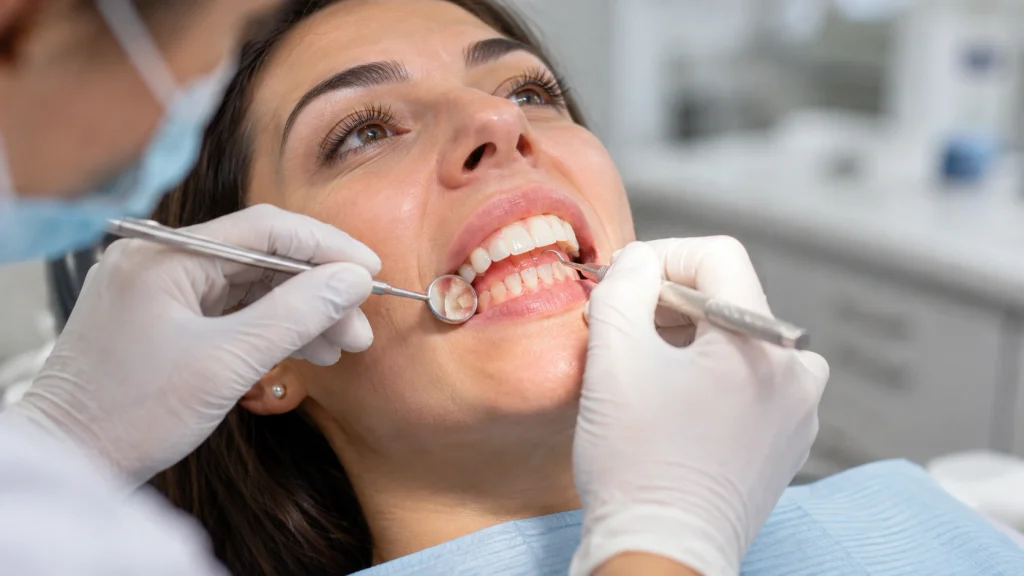
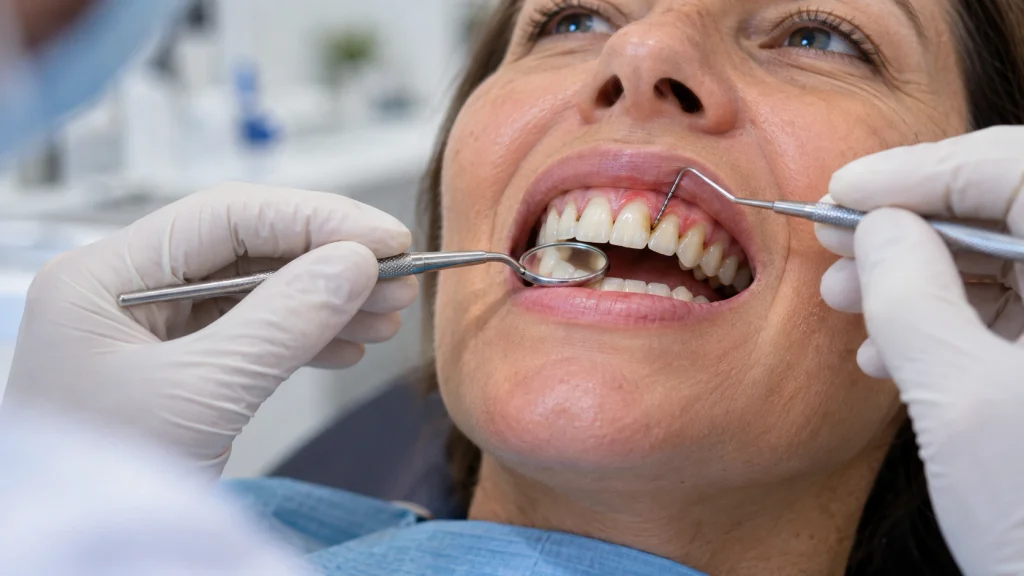
A Houston dentist can diagnose gum disease by examining the space between the tooth and the gum and measuring the depth of the pocket at various points around each tooth. Pockets should be 1-3mm deep. Deeper pockets indicate periodontitis and usually need treatment other than a routine cleaning.
Most Houston general dentists treat gingivitis and early periodontitis in their office, and more severe cases are referred to a periodontist, who is a specialist in the treatment of gums and bone around the teeth.
How to Protect Your Gums
- Brush twice a day with a soft-bristled or electric toothbrush, but not scrub too hard.
- Floss once a day even if your gums bleed at first, regular flossing will usually make the bleeding stop in 1-2 weeks.
- Don’t use tobacco products which greatly increase your risk and make it harder to recognize early symptoms.
- Schedule checkups and cleanings every six months; plaque that is not cleaned at home becomes plaque tartar, which can only be removed by a professional cleaning.
- If you notice any bleeding, sensitivity, or bad breath with your new gums, tell your dentist about it, instead of waiting for your next appointment.
Gum Disease Care at Smile 4 Ever Dental
Our goal at Smile 4 Ever Dental is to detect gum issues early and communicate them to you in an easy-to-understand manner. We care for your gums according to the level of gingivitis and periodontal disease that you have, whether it’s mild or severe.
- Early detection focus: Gum health is assessed at every appointment, not just when there is an obvious problem, and issues are identified at the gingivitis stage, if possible.
- Clear stage-by-stage explanations: You won’t be told that your gums have some gum disease when we are actually looking at what we are seeing and what stage your gums are in.
- Full range of periodontal treatment: Our Houston team provides gum health care at all levels ranging from deep cleanings to more advanced care.
- No scare tactics, just honest guidance: We will simply tell you what is reversible and what is manageable and not overpromise treatment that you don’t need.
Schedule a Gum Health Evaluation
Don’t wait for pain to indicate that there is bleeding, swelling, or changes in the appearance of gums. Schedule a consultation with our team in Houston, TX and you will be able to see just where your gum health stands.
The signs of gum disease are easily recognizable, with the red, puffy, easily-bleeding gums of gingivitis leading to the recession, looseness, and bone loss of advanced periodontitis. The early stage is totally reversible that’s why early detection is so important and gum disease seldom hurts. If you’re a Houston patient that has noticed any changes in the appearance or sensation of your gums, you should bring it up at your next cleaning. An honest evaluation now is always simpler than treating advanced disease later.
If you have any questions about what your gums are saying, please give our Houston, TX office a call today. We are happy to look and tell you what we see.
Frequently Asked Questions
What does gum disease look like in its earliest stage?
The first stage of gingivitis is characterized by red, puffy, swollen gums that bleed easily during brushing or flossing, but there is no recession or looseness visible.
Is gum disease curable once it reaches periodontitis?
No. When bone and tissue loss has already occurred, it cannot be completely reversed, however, treatment can prevent the disease from worsening and help control it in the long-term.
Can gum disease be reversed at the gingivitis stage?
Yes, completely. Because gingivitis does not cause any bone loss, a professional cleaning and some improved daily brushing and flossing usually bring the gums back into a healthy state.
Is periodontitis reversible with treatment?
Not to the point of regaining all bone and tissue, but the course of the disease can be stopped, and in certain cases, bone regeneration can restore some of the lost tissue.
When should I see a dentist for bleeding gums?
Bleeding that lasts longer than a couple of weeks or that bleeds with light brushing or for no apparent reason such as a new flossing routine is worth an evaluation instead of waiting.
What are the stages of gum disease in order?
Healthy gums, gingivitis, early periodontitis, moderate periodontitis and advanced periodontitis, with the bone and tissue damage getting worse with each stage after gingivitis.
Can gum disease cause tooth loss?
Yes. Periodontitis can cause the loss of teeth in adults, one of the most common causes of tooth loss, if it is left untreated.